




In the last two parts we read about the black hole. This time we will learn about the white hole. From the name alone you can surely say that a white hole will be the exact opposite of a black hole, can't you?
And so it is. The idea of the white hole was born out of the very idea of the black hole. With a black hole we see that nothing at all, not even light, can get out of it: it is lost inside the black hole. But with a white hole the reverse happens. That is, everything will come out from inside a white hole, and nothing at all — not even energy — will be able to get in. As a result a white hole will look white, because all the light will come out of it.
Where the idea of the white hole began
If black holes exist in the universe then white holes ought to exist too. For if we accept that a black hole is pulling everything in, the question arises of where all of it will go — since a black hole is not of infinite mass and does not occupy an infinite amount of space. So the objects that fall into a black hole need a way out. That is what theoretical physicists have named the white hole.
How likely is a white hole?
The strongest case for the existence of white holes is Einstein's general theory of relativity. The idea of the white hole came out of solutions to the equations of general relativity. Much research has been done on it since. Although at first nobody paid the idea of the white hole much attention, on the basis of ‘loop quantum gravity' theory there is a fair chance that white holes exist.
The birth of a white hole
Scientists think a white hole is born from a black hole itself. They believe that a black hole will one day be extinguished, and will then expel the objects held inside it. That is what will then become a white hole. In other words the black hole itself, by displaying the opposite of its own character, becomes a white hole. All of this is only an idea so far. Research continues, and one day we will know in detail.
The event horizon
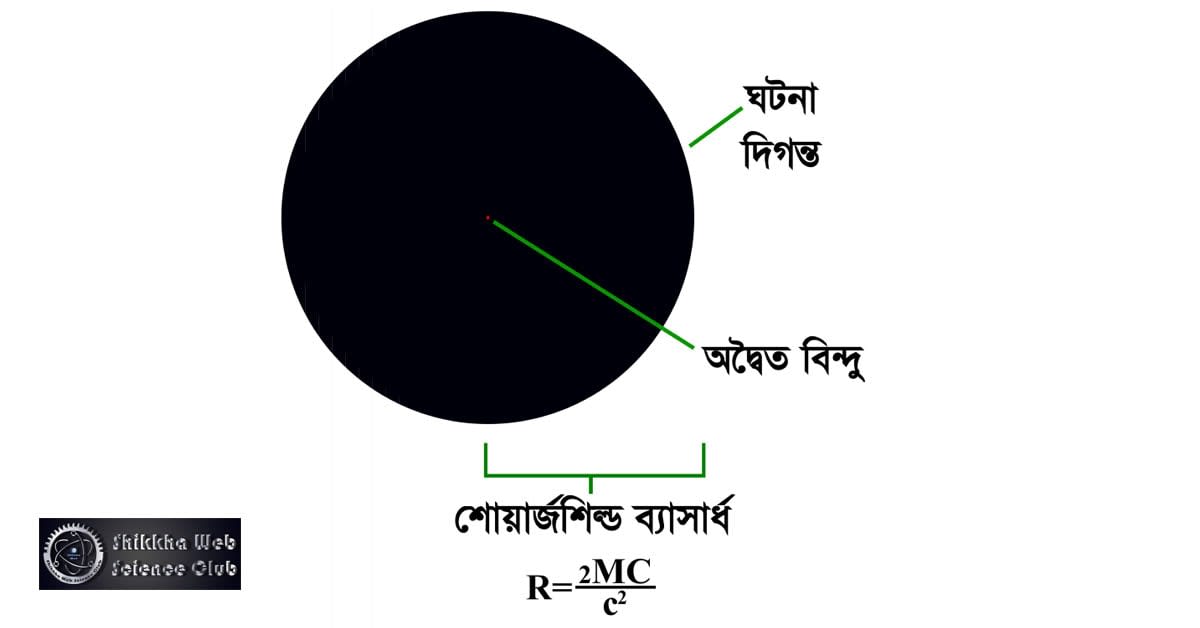
Do you remember that we read about the black hole's event horizon? In the same way the white hole has an event horizon too. Just as a black hole's essential power begins at its event horizon, so it is with the white hole. Nothing at all can cross the event horizon of a white hole. It is from the event horizon that it expels everything.
The Big Bang and the white hole
To put the Big Bang briefly: the universe was created from a point, or singularity. That point was of infinite mass, and it is through the explosion of that point that this expanding universe came into being. So it is by this explosion that the white hole theory can be given a footing.
A journey into a white hole
As in the last part, we are going on a tour again. This time too I will take my tour in my head without leaving the house 😛. Going on the tour needs a little use of the imagination. So let's begin.
Suppose you are somehow inside a white hole. Now the white hole is unwilling to give you a place. It will throw you out by any means. But here is the interesting bit. If it does throw you out, it may be that you will end up outside this universe, in some other one 😱. Surprised? Surprising though it is, some scientists think so. Not everyone is in favour of the argument, though.
One section among them believes that while throwing you out, a white hole could hurl you into any other time. Rather like time travel, in other words!
I offer you my sympathies, though. It is thought that when a white hole expels matter it drops it in various places and times. It may be that each piece of your body goes off to a different place and a different time 😱! Many such entertaining things are possible in a white hole.